




A Conny Kristel Fellow at the Exile Archive
Tracing East Asian Escape Routes from Nazi Germany
From March 2 to March 6, I visited the German Exile Archive 1933-1945 as a Conny Kristel Fellow. During my research stay, I explored a little-known overland escape route taken by Jewish refugees from Nazi Germany via the Soviet Union and East Asia. As the first Conny Kristel Fellow at the German Exile Archive, my visit also marked the beginning of the archive’s participation in the CK Fellowship Programme.
Flight and Forced Emigration from Nazi Germany
In the late 1930s, tens of thousands of Jews were forced to leave Germany and Austria as a consequence of racial persecution. Many of them emigrated overseas to North and South America, travelling by sea on steamships departing from ports in Germany, France, and Italy. About 18,000 people fled to Shanghai. The flight reached its peak in 1939, when almost 80,000 people escaped from Germany alone.
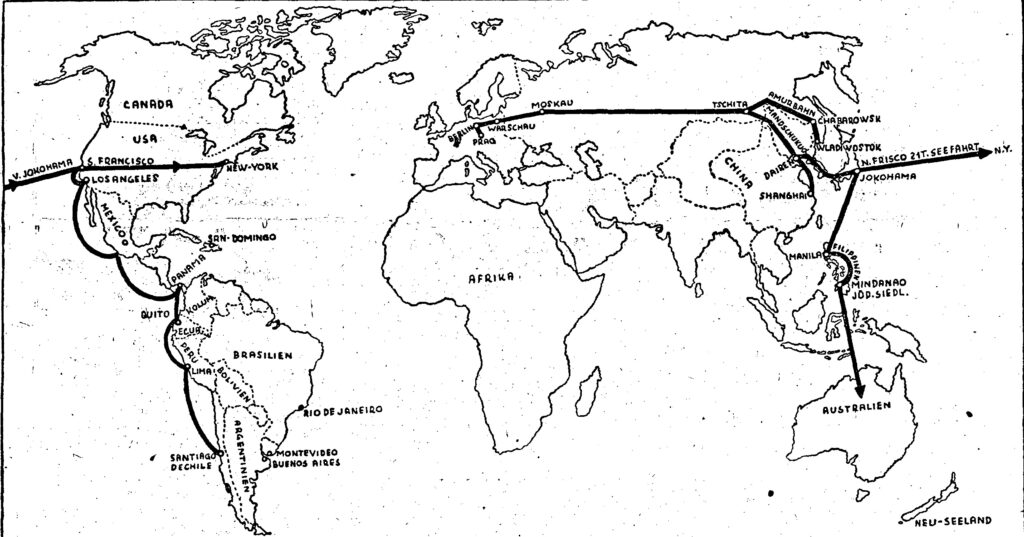
After the outbreak of the war in November 1939, passenger maritime travel was disrupted, and most refugees departed from Italian ports. However, when also Italy entered the war in June 1940, the only remaining possibility was to travel overland through the Soviet Union and East Asia. Once in Manchukuo, the puppet state created by Japan in north-east China, refugees continued either eastward to Japan – where passenger transport to North and South America was still available – or southward to Shanghai. In these exceptional and tragic circumstances, hundreds of German and Austrian Jews crossed Manchuria between June 1940 and May 1941.
Researching a Little-known Escape Route at the German Exile Archive
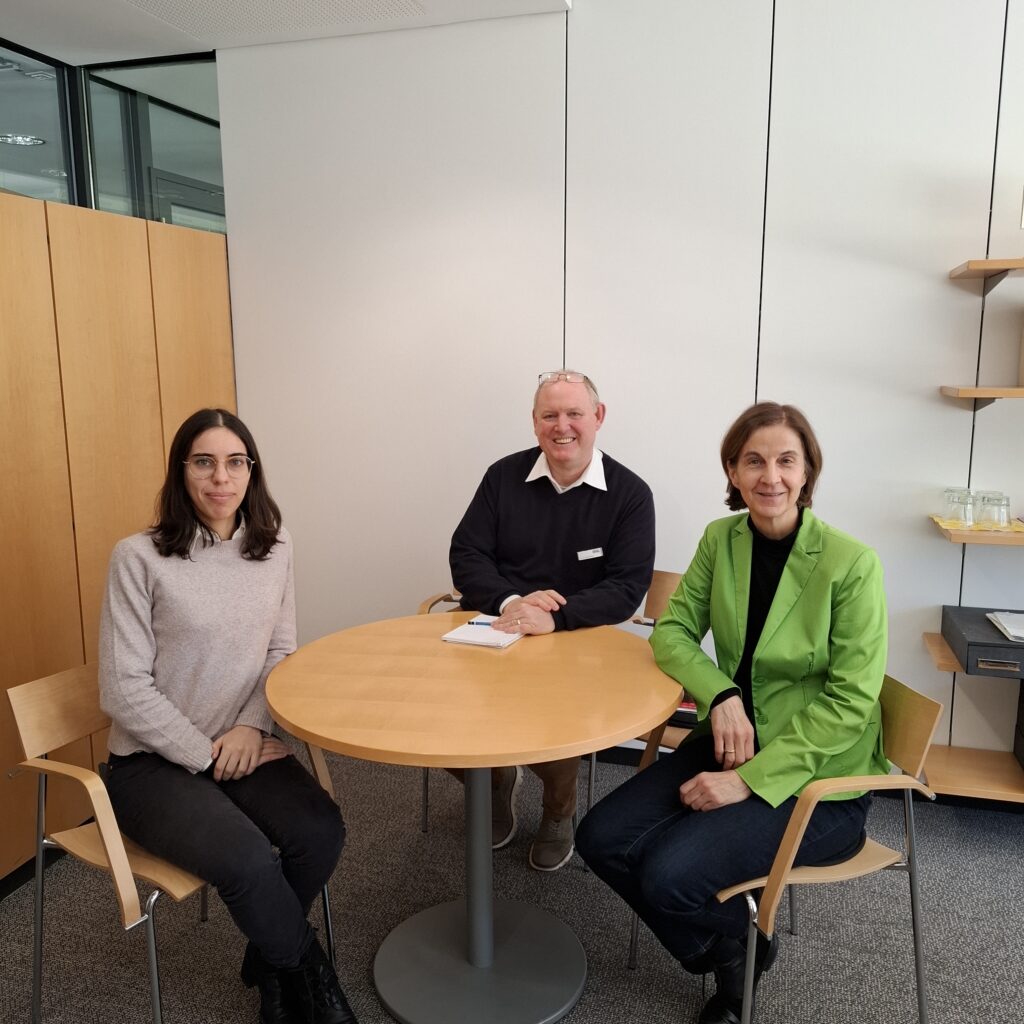
During my doctoral research at the University of Pavia, in Italy, I am researching the history of Holocaust refugees in North China and Manchuria. In March, I spent a week at the Exile Archive to investigate this little-known and roundabout escape route. Preparation for my fellowship period began by researching the DNB catalogue in order to identify potentially relevant sources. During this phase, a preliminary video conference with Dr. Jörn Hasenclever was particularly useful in helping me identify relevant materials in advance and make the most of the limited time on site. Once in Frankfurt, I was briefly introduced at the Exile Archive and was able to begin working on the sources immediately. At the end of my week-long stay, I was offered the opportunity to visit the Archive’s permanent and temporary exhibitions in an individual guided tour, which allowed me to gain an even deeper insight into the archive’s collections and its important work in preserving and communicating the history of exile.
The Conny Kristel Fellowship and EHRI
My presence at the Exile Archive was supported by the Conny Kristel Fellowship Programme. The Conny Kristel Fellowship Programme is funded by the European Holocaust Research Infrastructure (EHRI), a European Research Infrastructure Consortium (ERIC) that connects archives, libraries, and research institutions across Europe and beyond. EHRI-ERIC aims to support and strengthen Holocaust research by improving access to dispersed archival sources and by fostering international collaboration among scholars. Through the Conny Kristel Fellowship Programme, researchers are able to carry out research stays at 21 partner institutions that hold important collections related to the Holocaust and its aftermath.
As one of five German host institutions for the fellowship programme, the German Exile Archive provides access to valuable sources on exile and emigration during the Nazi era. In particular, the archive collects exile publications, personal legacies from people forced into exile, and archives belonging to exile organisations. The holdings also include an extensive collection of exile newspapers and Jewish periodicals published in Nazi Germany. Among the latter, the Jüdisches Nachrichtenblatt constitutes an important source for retracing the last months of forced emigration. However, it must be approached with particular caution.
The Jüdisches Nachrichtenblatt and the Trans-Siberian Escape Route
After the November Pogrom of 1938, the last remaining Jewish newspapers were banned. In their place, the Nazi authorities ordered the creation of a Jewish news bulletin, the Jüdisches Nachrichtenblatt, intended to inform the Jewish population about official decrees and new regulations. Three editions were published – in Berlin, Vienna, and Prague – and “emigration” was one of the few topics permitted by the Nazi censors.
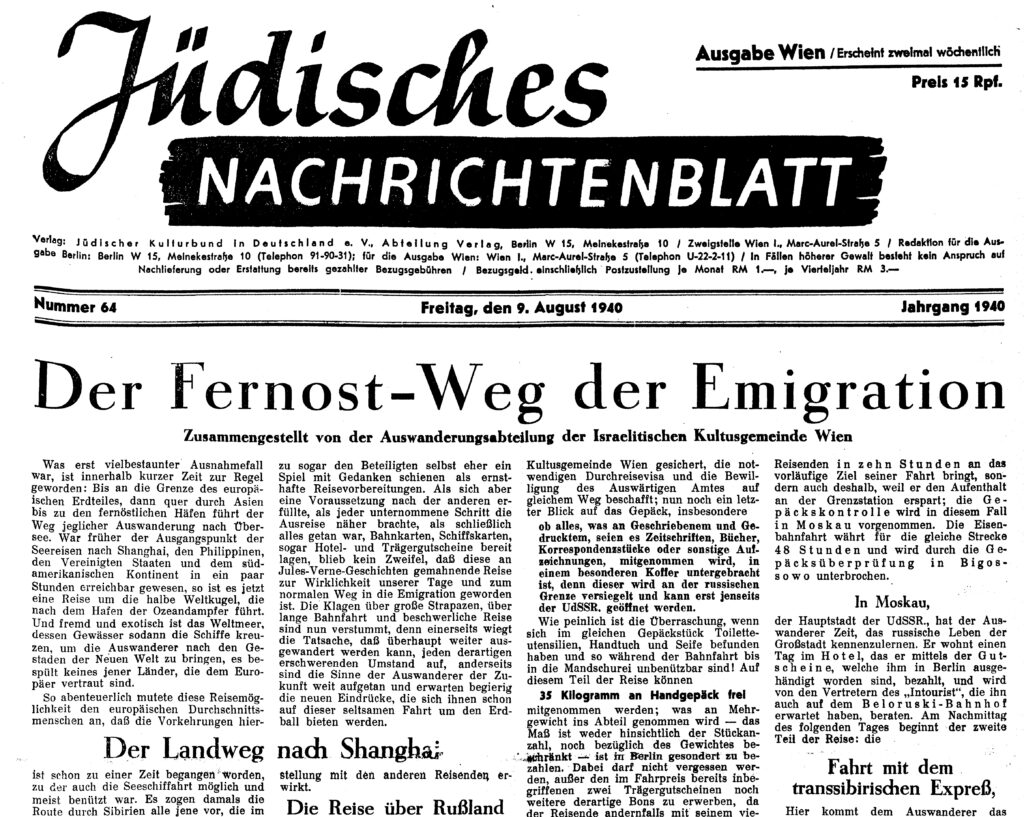
Several articles were devoted to describing the overland escape route via Trans-Siberian Railway. These texts reflect the attempt of Jewish editors and community leaders to provide practical information to prospective refugees. At the same time, these articles often presented a positive, reassuring, softened, and even exoticised image of the journey, depicting it almost as an adventure, “reminiscent of Jules Verne’s stories”. Such portrayals hid the reality behind these journeys, which were in fact the result of persecution and forced expulsion. Moreover, despite the considerable attention devoted by the Jüdisches Nachrichtenblatt to this emigration route, fleeing the Third Reich in 1940-1941 was extremely difficult, and only a few thousand Jews from Germany and Austria ultimately managed to escape in this way.
A Personal Testimony from the Archive
One of them was Wolfgang Hadda, who fled to Shanghai in 1941. Hadda’s estate is preserved at the Exile Archive. In his autobiography, Knapp davongekommen : von Breslau nach Schanghai und San Francisco. Jüdische Schicksale 1920-1947 (Hartung-Gorre, 1997), he describes the long journey through the Soviet Union and Manchuria, as well as his experiences in exile in Shanghai.
In conclusion, the research at the Exile Archive provided a valuable opportunity to explore the Archive’s collections and benefited from the helpful support of the Exile Archive’s staff. The sources preserved at the Exile Archive will represent an important element for my ongoing research and will undoubtedly contribute to my doctoral dissertation.